Covering our ten topics, here you can find both introductory overviews and in-depth articles; creative explorations alongside educational guides; and conversational interviews next to critical debriefs of what’s going on in the world.

Since 2019, thousands of you have engaged in the EcoResolution campaigns and shared your desire to build healthier, ecologically thriving communities.
Earthed exists to galvanise and support a global movement actively restoring and regenerating their local environments. Earthed is here for you and your community.

Protest, Protect, Build with Satish Kumar
“Millions of people around the world are engaged in actions for change. For the want of a better name I call it the holistic environmental movement. I include the adjective ‘holistic’ to indicate that this global movement is and needs to be committed to enhancing the natural environment, the social environment and the spiritual environment.”

AN OPEN CALL FOR ART THAT RESPONDS TO THE CLIMATE EMERGENCY.
#CreateCOP27 invites creatives aged 14-30 to submit work that generates conversations around the urgent need for climate action and raises awareness of the important decisions being made at COP27, the United Nations’ annual climate summit.

How do we find hope in trying times? Read this incredible interview between Jane Goodall and Satish Kumar for words of hope, inspiration, and imagination.
“Although we’re surrounded by doom and gloom, there are also so many amazing things happening. One of my greatest reasons for hope is the young people, because once they understand the problems, they take action – they just go with it.”

One Earth, One Humanity, One Future
Replacing the old story of separation with the new story of unity and embracing radical pluralism is the imperative of our time, says Satish Kumar.

Scottland is in dire need of rewilding - but how will the public overcome social and political barriers in order to bring about change?



Is there such a thing as an ‘ethical bank’? What does this mean and what would it look like?

What your money did while you slept last night: Banks, fossil fuels, climate change, and dirty secrets.

Solving the plastic pollution crisis requires a fundamental change in thinking about the production of plastic in the first place: where it comes from, and why it is being produced in such monumental volume.
The story of plastics is the story of how Big Oil got into everything.

Around the world, localisation is gaining momentum for being a solution-multiplier, and building resilient local economies and communities. From localising economic activity and supporting small businesses to decentralising energy systems, localisation continues to prove to be the solution to numerous systemic problems.


What is localisation really about? An introduction to the global movement building resilient local economies and communities.


Climate breakdown erodes people’s lives. It doesn’t arrive with a bang or a whimper but a steady, crushing squeeze.
Climate breakdown is driving a new commodity supercycle, putting the squeeze once again on those least able to afford it.


Degrowth is too often portrayed merely as an economic idea when it is, in fact, just as much a cultural notion. The culture of degrowth calls for us to view ourselves as stewards of the planet.
To save the planet, the degrowth movement calls not for us to sacrifice prosperity, but to redefine it.

You will often hear about climate justice policy for the United States, the European Union, and the United Kingdom such as the Green New Deal or the Green Recovery. But what does climate justice policy look like in Latin America and the Caribbean?

Art has the ability to raise awareness and to tell stories; art can reflect back at us the world we live in, depict visions of the future, and shed light on histories and cultures gone by, both key to reimagining the world we want to cocreate.
But beyond raising awareness and contributing to storytelling, art can play an active role in effecting change.
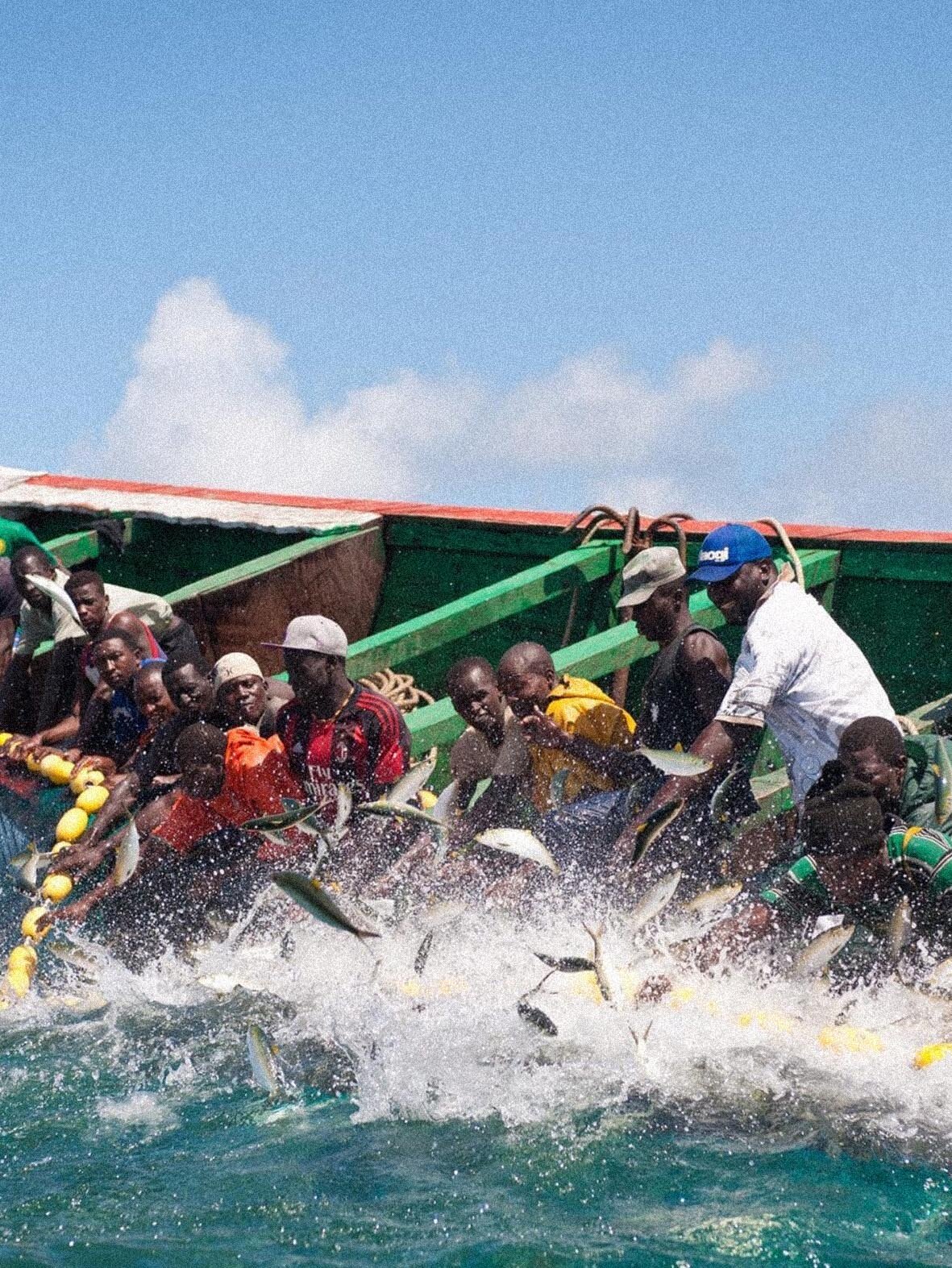
Easy answers can be tempting, but oversimplifying the ocean crisis can do more harm than good. Will McCallum explores the fundamentals behind fishing.

“It is quite frequently that we come across articles and papers that declare the Asia Pacific region as the biggest contributor to ocean plastic. Labelling these countries as polluters is both facetious and inaccurate.”
Satyarupa Shekhar, Asia Pacific Coordinator for #BreakFreeFromPlastic, is shifting the narrative of the plastic waste crisis in the Asia Pacific Region…


“Focusing on emissions allows for the actual crises to be side-stepped. It becomes a justification for other forms of extraction and pillaging.”
How do we address the root of our ecological crises, and not just the symptoms? We can start by repairing our relationship with nature…

The idea of net zero at its core is about balance: a net zero world in theory is a world we’d want to live in. But reducing emissions is also a matter of climate justice.
Can goals of Net Zero by 2050 help us address the need to confront our growth-based economy? Or is this just another form of greenwashing?

In climate talks and global goals of emissions reduction, we often hear politicians congratulating themselves and their country for being climate leaders as their emissions fall. But behind this hot air lies a lesser-known phenomenon revealing the reality of many so-called emission cuts: carbon outsourcing.


“Fossil fuel subsidies are paying for our own destruction.”
The burning of fossil fuels is one of the primary causes of global warming, yet a report from the International Monetary Fund recently claimed that the fossil fuel industry benefits from subsidies of $11m every minute. What are fossil fuel subsidies? Why do they exist? and how could we transition away from them?